
 Posted by
 Understanding how to play drawing hands in poker is one of the most fundamental and profitable skills you can master in Texas Hold’em. These are hands that are not made yet—such as flush draws or straight draws—but hold strong potential to improve into winning combinations on future streets. In this comprehensive guide, you’ll learn how to play drawing hands effectively, count your outs, and use pot odds to make mathematically correct decisions at the tables.
Contents
- What Is a Drawing Hand in Poker?
- Counting Outs – Your Drawing Hand Equity
- Example – Understanding Straight Draws
- Using Your Outs – Should You Call or Fold?
- Pot Odds Explained
- Semi Bluff Poker – The Aggressive Approach
- FAQ: Drawing Hands in Poker
- Conclusion
What Is a Drawing Hand in Poker?
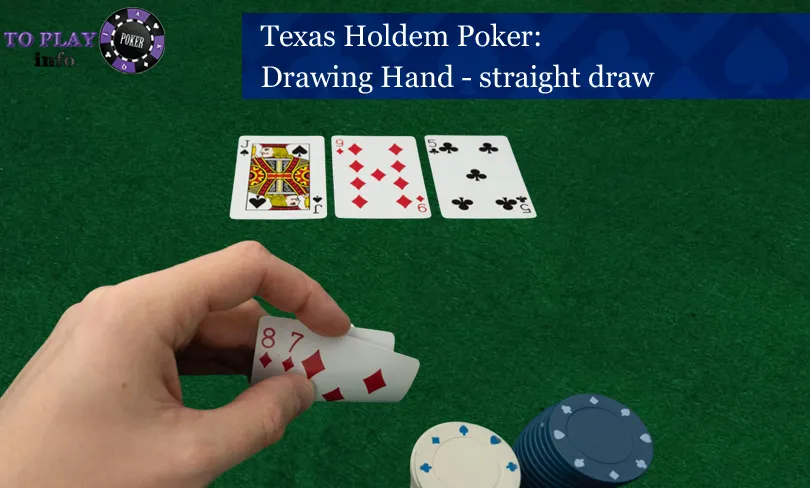
A drawing hand is a hand that’s currently not the best, but has strong potential to improve. The most common types are flush draws and straight draws. These hands require one more card to become made hands — and when they hit, they often win big pots. Knowing when to apply semi bluff poker techniques with these hands can dramatically improve your win rate.
Counting Outs – Your Drawing Hand Equity
An out is any card that improves your hand to a likely winner. For example, with a diamond flush draw — where you have two diamonds in hand and two on the board — there are 9 remaining diamonds that can complete your flush. That’s 9 outs.
For straight draws, it depends:
- Open-ended straight draw (OESD): 8 outs (four cards on either side)
- Gutshot straight draw: 4 outs (only one card completes it)
Drawing Hand Example – Straight Draws in Action
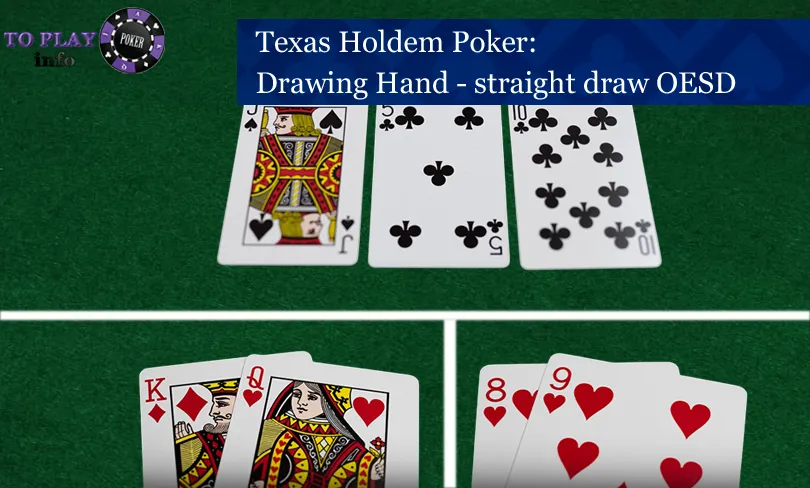
If you hold and the flop is , you need either a A or a 9 to complete the straight — that’s an NUT OESD with 8 outs.
If the board instead is , then only a T will complete your straight — a gutshot with just 4 outs.
If you hold and the flop is , you need either a Q or a 7 to complete the straight — that’s an LOW OESD with 8 outs.
When to Call or Fold Drawing Hands
The more outs you have, the better your odds to win the hand. But to make the right decision, you need to compare your chance to improve against the size of the bet — this is where pot odds come into play. Combining pot odds with semi bluff poker knowledge helps make better-informed decisions on the flop and turn.
Suppose you have a flush draw on the flop. That’s 9 outs. There are 47 unseen cards (52 – 2 in hand – 3 on the flop). So your chance of hitting on the turn is 9/47, and the ratio of outs to non-outs is 9:38 or roughly 1:4.2.
Pot Odds for Drawing Hand Decisions
Suppose you have a flush draw on the flop. That’s 9 outs. There are 47 unseen cards (52 minus 2 in your hand and 3 on the flop). Your chance of hitting your card on the turn is 9/47, which means the ratio of non-helpful cards to helpful cards is roughly 4.2 to 1. To make the correct decision, you must evaluate this probability against the price of the bet.
If your pot odds are better than your drawing odds, you should call. That’s the essence of profitable drawing in poker.
This is the passive way of playing drawing hands — calling and hoping to hit. It’s a strong foundation for newer players, especially when the bet is small relative to the pot.
Aggressive Play: When to Semi-Bluff Your Draws
While this guide focuses on the fundamentals of passive play—calling when the price is right—playing drawing hands in poker also offers excellent opportunities for controlled aggression. By betting or raising with your draws, you combine your post-flop equity with fold equity, forcing your opponents to fold better hands. To master these advanced aggressive strategies, head over to our comprehensive guide on Mastering the Poker Semi Bluff.
Looking to improve your semi-bluff game even more? Dive into our complete guide on How to Play Suited Connectors in Poker. These speculative hands often turn into powerful draws, making them ideal for semi-bluffing with both equity and fold equity.
Looking for more advanced tactics? Check out our in-depth guide on Mastering the Poker Semi Bluff — where we break down aggressive play with flush draws, straight draws, and combo draws.
🎯 If you’re ready to play real hands and test your skills with draws and semi bluffs, we recommend top platforms like CoinPoker and Tigergaming Poker — trusted poker sites with active player pools and great traffic.
Conclusion
Drawing hands are a critical part of poker. Whether you’re chasing a straight or flush, understanding outs and pot odds helps you make smart, profitable decisions. Use the passive line when the price is right — and the semi bluff when you want to apply pressure. Master both, and you’ll become a much tougher player to beat.
📘 Want to master more strong starting hands? Check out our full guide on How to Play Pocket Aces — the ultimate breakdown for playing AA profitably.
📘 For more strategy guides on premium hands, check out our other articles on Play Pocket Queens and How to Play Pocket Kings.
FAQ: Drawing Hands in Poker
A: It’s a hand that isn’t strong yet but has potential to improve into a winning hand with the right card.
A: Usually 9 outs if you have four cards of the same suit (2 in hand, 2 on board).
A: OESD (open-ended straight draw) has 8 outs, gutshot only 4.
A: Only if the pot odds justify the call — compare the pot odds to your drawing odds.


One comment