
 Posted by
 In the modern game, aggression is key, but blind aggression burns money. While most players understand the standard continuation bet (c-bet), fewer understand the power of checking back. This is where the Delayed C-Bet comes into play.
Many players feel compelled to bet the flop simply because they were the pre-flop aggressor. However, checking back the flop with the intention of betting the turn is a sophisticated line that can protect your range, induce bluffs, and control the pot size. In this guide, we will refine your poker c bet strategy by adding this powerful weapon to your arsenal.
What is a Delayed C-Bet?
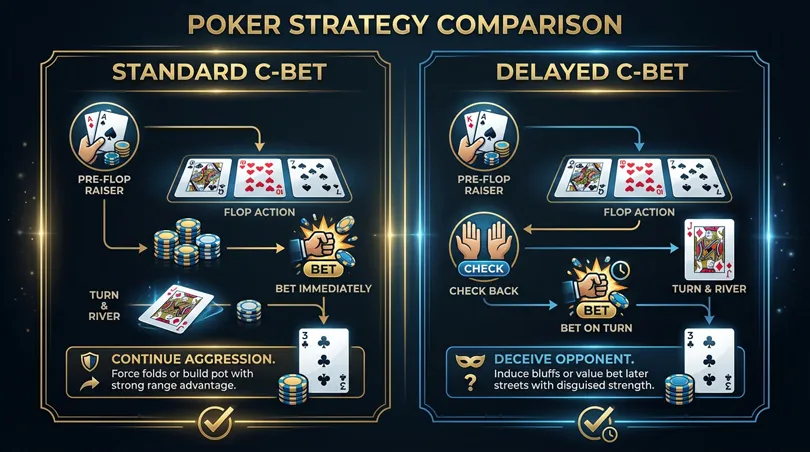
A Delayed C-Bet occurs when the pre-flop aggressor decides to check behind on the flop (instead of c-betting) and then bets on the turn after the opponent checks to them again.
Unlike a standard c bet in poker, which attacks the pot immediately, the delayed variation defers the aggression to the fourth street. This move is primarily used when you are In Position (IP), utilizing the concept of check back poker to exploit specific opponent tendencies.
Key Takeaway: A Delayed C-Bet is not about giving up; it is a calculated decision to extract value or bluff on a later street where your opponent’s range is better defined.
Why Use a Delayed C-Bet Strategy? (The Benefits)
Why wait to bet? Incorporating this line into your poker turn strategy offers three distinct advantages over a standard flop bet.
1. Pot Control and Way Ahead / Way Behind
When you hold a hand that is likely best but vulnerable to being outdrawn (like a mid-pair), betting the flop can be tricky. If you get raised, you are in a miserable spot. By checking back, you keep the pot manageable and often induce your opponent to bluff on the turn.
2. Protecting Your Checking Range
If you only check the flop when you have garbage, observant opponents will start probing (betting) the turn 100% of the time. By checking back with strong hands or decent draws (Delayed C-Betting), you make your checking range dangerous.
3. Bluffing Efficiency
On super dry boards, opponents often fold to a flop c-bet. However, stubborn opponents might float the flop but fold to a turn bet if you show delayed strength. This line looks incredibly strong because it mimics a “trap.”
When Should You Delay Your C-Bet? (The Checklist)
Not every situation warrants a check-back. Use this checklist to decide between a standard continuation bet and a delayed one.
- The Board is “Way Ahead / Way Behind”: Example: You have A-K on a K-8-2 rainbow board. You crush lower pairs, but you don’t need much protection. Checking back invites bluffs.
- The Board is Locked Down: On a texture like A-A-7, your opponent either has an Ace or they don’t. A flop bet folds out everything you beat. A delayed c-bet might get a pocket pair to call on the turn.
- Opponent is Aggressive: Against players who love to check-raise the flop, checking back neutralizes their aggression and allows you to realize your equity.
💡 Related Strategy: Playing in position is easier, but what if you are first to act? Check out our complete guide on C-Betting Out of Position to fix your leaks in those tough spots.
Delayed C-Bet vs. Floating: What’s the Difference?
It is crucial not to confuse this strategy with floating poker. While both involve playing later streets, the difference lies in initiative.
- Delayed C-Bet: You were the pre-flop aggressor, you checked the flop, and you bet the turn.
- Floating: You called a bet on the flop (usually in position) with the intention of taking the pot away on the turn or river if the opponent checks.
Common Mistakes to Avoid
Even advanced players mess up this strategy. Here are the pitfalls to watch out for when c betting on the turn.
- Checking Back Vulnerable Hands: If you have Top Pair on a wet board (e.g., 9-8-7 with a flush draw), do not delay. Bet immediately to charge draws.
- Giving Up Too Easily: If you check back the flop and the opponent bets the turn (Probe Bet), you shouldn’t auto-fold. You need to defend your checking range by calling with medium strength hands.
- Wrong Sizing: Since the pot is smaller on the turn (because the flop was checked), you often need to use larger sizings (66% to 75% pot) to extract value or generate fold equity.
Conclusion
Mastering the Delayed C-Bet strategy separates the break-even players from the crushers. It allows you to navigate tricky spots, trap aggressive opponents, and bluff with higher efficiency. Remember, c betting is not just about the flop—it’s about constructing a multi-street plan.
Want to dive deeper into advanced moves? Learn how to punish opponents who bet too much with our guide on Check Raising Effectively or review the fundamentals of Profitable C-Betting.
FAQ: Delayed C-Betting
A standard C-bet happens on the flop immediately after being the pre-flop aggressor. A Delayed C-bet involves checking the flop and betting the turn after the opponent checks to you again.
Use it on dry boards where you block the opponent’s calling range, in Way Ahead / Way Behind situations, or to protect your checking range against aggressive opponents.
Yes, it is highly effective. It represents a strong hand that was slow-played on the flop, making it difficult for opponents to call with weak pairs or high cards.
🎯 Ready to test your new strategy? Practice your Delayed C-Bets in real games on CoinPoker or Tigergaming Poker.


Facebook Comments